
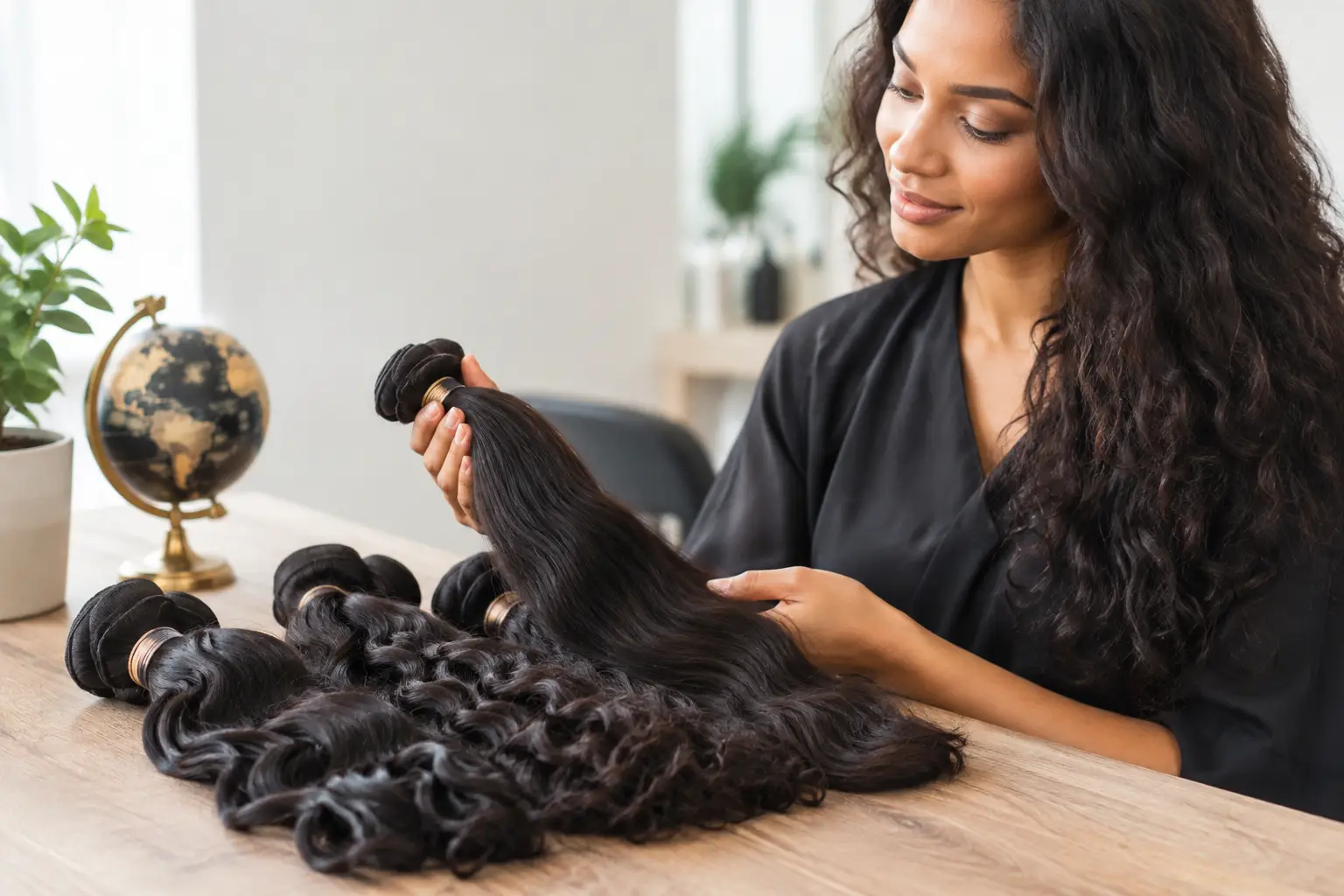
Ethically Sourced Human Hair for Your Salon
A client may never ask where her extensions came from at the consultation. But the moment a weft sheds early, the colour behaves unpredictably, or the story behind the hair feels unclear, your salon’s reputation is on the line. Ethically sourced human hair is not a marketing extra. For a premium extension business, it is part of the standard that protects client trust, service quality and long-term revenue.
For salon owners and extension specialists, the goal is not simply to stock hair labelled “ethical”. It is to work with a supplier that can explain its sourcing approach, maintain consistency through quality control and help you select hair that performs for the client in your chair.
What ethically sourced human hair should mean
Ethical sourcing begins with respect for the person providing the hair. At its most credible, it means the donor has given informed consent, received fair compensation and has not been pressured, misled or exploited. It also means the supply chain is managed with enough care that a supplier can account for how hair moves from collection through processing and into professional-use extensions.
That definition sounds straightforward, yet the hair extension industry is complex. Hair may be collected directly from donors, through local collectors, at salons or through organised community networks. It may then be sorted, cleaned, processed and manufactured in another region. Each stage creates a responsibility to ask better questions.
Ethical sourcing is therefore not proven by a country name, a single label or a dramatic product claim. It is demonstrated by traceability, responsible supplier relationships, clear standards and a willingness to discuss the realities of the supply chain. A supplier that cannot explain its process leaves the salon carrying unnecessary risk.
Ethical does not automatically mean unprocessed
There is a common assumption that ethically sourced hair must be completely raw, untouched hair. Raw hair can be an excellent choice for certain clients and services, but ethics and processing are separate considerations.
Professional extensions may be carefully cleansed, colour-matched, textured or constructed into wefts, tapes, keratin bonds or other application formats. The relevant question is whether this work is handled responsibly and whether the finished hair remains honest about its quality, origin and expected performance. Processing can support consistency, but excessive chemical treatment can compromise longevity. Your supplier should be clear about that trade-off.
Why sourcing standards affect salon performance
A salon does not sell a bundle of hair. It sells a transformation, an installation experience and the confidence that the result will remain beautiful between appointments. When hair quality or sourcing integrity is uncertain, the cost is rarely limited to the product itself. It appears as rework, uncomfortable client conversations, lost referrals and time taken away from profitable services.
Higher-quality human hair, sourced with care and selected for professional performance, is more likely to offer consistent cuticle direction, realistic movement and dependable styling behaviour. Those characteristics matter when you are blending extensions with a client’s natural hair, refining a colour service or creating a camera-ready finish for an important event.
Wear life matters too. Not every client will achieve the same result, because maintenance, heat styling, water quality, colour services and installation method all influence longevity. Still, hair designed to last one to three years with appropriate care offers a different commercial proposition from standard extensions that deteriorate after a short period. It gives you the opportunity to position extensions as a considered investment rather than a disposable add-on.
That distinction supports healthier margins. A client who sees value in premium hair is more likely to follow maintenance advice, return for move-up appointments and refer friends who want the same standard of service. Ethical sourcing and quality are not identical, but when both are taken seriously, they create a stronger foundation for client retention.
Questions to ask a wholesale hair supplier
The most useful sourcing conversation is specific. Rather than asking, “Is this hair ethical?”, ask how the supplier verifies consent, compensation and supply chain practices. Look for direct answers, not vague assurances.
A credible supplier should be able to discuss how hair is collected, what supplier relationships are in place and what checks occur before the hair reaches your salon. They should also be transparent about where certainty ends. In a global supply chain, no responsible business should promise perfection without evidence. What matters is a documented commitment to due diligence, ongoing review and improvement.
Ask about quality controls alongside ethics. Find out how the hair is sorted, how cuticle alignment is protected, whether hair is blended from multiple donors and how each extension format is tested. If you are building a signature extension menu, ask what can be customised for length, colour, texture, density and application method.
You should also ask about support after purchase. A wholesale relationship works best when your supplier helps you make informed decisions before you order and can assist when a technical question arises. Product education is particularly valuable for newer extension businesses, while established salons may need guidance on expanding into a new texture range or improving their pricing structure.
Build ethical sourcing into your client experience
You do not need to overwhelm clients with supply-chain language. Most want a clear, honest answer and confidence in the recommendation you are making. Include ethical sourcing in the way you explain your extension standard: the hair has been selected with attention to responsible sourcing, quality and wear performance.
Then connect that standard to practical care. Explain the maintenance schedule, recommended home care and realistic lifespan for their chosen method. Avoid promising a fixed number of months or years to every client. A swimmer who uses heat daily will have different outcomes from someone following a low-heat routine and returning for regular maintenance.
Your consultation is also the place to establish suitability. Fine hair, significant breakage, scalp sensitivity or unrealistic expectations may mean extensions need to be delayed, adapted or declined. Premium service is not about saying yes to every booking. It is about protecting the client’s natural hair and delivering work you can stand behind.
Price for the standard you provide
Salons sometimes underprice premium extensions because they compare themselves with online sellers or low-cost installation offers. That comparison misses the value of professional sourcing, consultation, colour matching, customisation, installation skill and aftercare.
Build your pricing around the full service, including your time, expertise, overheads and the quality of the hair. When clients understand that their extensions have been chosen for responsible sourcing and reliable wear, the conversation can move beyond a price-per-gram comparison. They are investing in a result, not gambling on an unknown product.
A supply partner should strengthen your business
The right wholesale supplier does more than send stock. They help you select hair appropriate to your clientele, understand the performance of each range and make purchasing decisions that support your business goals. This is especially valuable when you are launching an extension category or moving your salon towards a more premium position.
ZENEDA® works with salon professionals who want that level of partnership, combining ethically considered sourcing with customised packages, product education and business-focused support. The purpose is not to make every salon look the same. It is to give each business a dependable foundation from which to build its own reputation.
Ethically sourced human hair gives you a meaningful standard to stand behind, but the standard only becomes valuable when it is matched with skilled application, transparent client communication and hair that performs as promised. Choose supply relationships that let you speak with confidence at the chair, because that confidence is what clients remember long after the appointment.


Comments